 |
 |
 |
 |
 |
 |
 |
 |
 |
 |
 |
 |
 |
 |
 |
 |
|
[Page 54]
by M. B. Berg
Translated by Gloria Berkenstat Freund
Based on earlier translation by Rita Ratson
Before the World War
I
The last 25 years of Jewish life in Zagłębie were – as in Jewish life in general – rich in various events. All of these events, which occurred in Jewish communal and political life, were always echoed in Zagłębie. Jewish Zagłębie always reacted – sometimes more strongly, sometimes more weakly – to all the events that we underwent.
And now, with all those years behind us, it sometimes seems that we are looking into a past that disappeared long ago, from which we are very distant so that the new era that began after the war will not allow the sad situation from before the war to return. However, in the light of the reality in which we live, we see that the numerous problems facing the Jews have not disappeared and that the many burning questions still exist as they existed 25 years ago. It also has become clear to us that since the plight of the Jews repeats itself throughout history, 25 years is quite a relatively short interval in time.
The final years of Czarism were very difficult for the Jews in former Russia. After the freedom movement was stifled during the years 1905 to 1906, a rigid reactionary regime was established. The Black Hundred rampaged and the gendarme's knout [Russian whip used for torture and punishment] did not permit any free thought; it was impossible to carry out any social and cultural work, even in the most modest framework, because the Czarist spies saw revolutionary shadows everywhere, kramole [sedition or revolt in Russian].
It is self-evident that when one writes about Jewish life during the last years of Czarism, a whole series of Jewish persecution and decrees would certainly have been carried out with complete brutal severity had it not been for the World War, which almost completely prevented the Czarist satrap from realizing his devilish plans.
In the year 1913, the Czarist government began invoking an old law according to which Jews were not permitted to live within an area up to 21 verst [Russian measure of distance – one verst = just over one kilometer or about .7 miles] from the border. The Jews from the Zagłębian villages, because of this, were ordered to leave their homes.
With the participation of the Będzin Rabbi Jekutiel Zalman Graubart, a memorandum and telegrams were sent to the Ministry of the Interior asking it to annul this revised fateful decree. In a separate action the Jewish deputy of the Gosudarstvennaya Duma [parliament], Dr. Bomasz, endeavored to contact high levels in St. Petersburg; in addition, Baron David Ginsburg was asked to intervene in this matter.
In a letter dated March 22nd, 1944, Yitzhak Grinbaum wrote the following to Rabbi Graubart about this fateful sentence:
“I have received a letter from the Jews living in the villages of the Będzin powiat [district] in which they asked me to turn to Dr. Bomasz and to write a telegram to the minister to halt the expulsion and to inform you about this matter. Hence, I am informing you that I wrote to Dr. Bomasz today and also added the necessary material. I will have the telegram ready [quickly] and will send it to you immediately.”
Simultaneously with the expulsions, we were witness to another tragic event that left behind a very heavy footprint on the Jewish economic structure. This was the boycott that was organized by the Endecja [N.D. – Narodowa Demkraczja – antisemitic Polish National Democracy] against the Jewish population because during the election of the Russian Duma [parliament] in 1912 the candidate of the PPS [Polska Partia Socjalistyczna – Polish Socialist Party], Jagiello, was elected with the help of Jewish votes and the Endecja candidate, Kuchaszewski, failed.
In this particular “holy” anti-Jewish act, the entire Endecja party and press were eager. In the Zagłębie suburbs an entire series of cooperative stores were opened, which took away a large number of Christian customers from the Jewish storekeepers. The boycott drove many thousands of Jewish business owners to the brink of economic ruin and collapse.
The Endecja were not alone in their struggle against the Jews; they had as their assistants the assimilated Jews of Zagłębie, who did not lag behind in relation to their friends in Warsaw. As we read in the Endecja newspaper Iskra [Spark] number 287 from the year 1912: “The assimilated Jews of Sosnowiec sent a telegram to Warsaw protesting against the defeat of Kuchaszewski.” The assimilated Jews of Będzin sent a similar telegram.
The economic destruction in the Jewish community, which came as a result of the Czarist persecution of the Jews and from the boycott was a factor behind the beginnings of mass emigration. Thousands of emigrants passed through Zagłębie, which was surrounded by borders. In addition to legal emigrants, a large number of illegal emigrants crossed the borders, and it quite often occurred that poor emigrants from various cities fell into the hands of professional smugglers who simply robbed and abandoned them to G-d's care in the Czeladź fields. Warnings were of no help. The total number of victims continued to grow. At the Sosnowiec railway station there was an I.K.A. employee [Yidishe Kolonizatsye Asosyatseye – Jewish Colonization Association] with a shiny brass badge on his cap, but he was unable to render much assistance. Large groups of emigrants passed through Zagłębie, through Myslowice,
[Page 55]
to Galveston, North and South America, Argentina, Brazil and other countries.
We saw the “parade” of Jewish poverty for ourselves. The number of
emigrants from Poland, Lithuania and Russia grew more and more the closer we
came to [the start of] the World War. The outbreak of the World War cut off the
stream of emigration and returned the Jewish masses to other roads of pain and
suffering.
But there also were moments of joy for Zagłębie Jews. So, for example, there was a great celebration because of the freeing of Mendel Beilis and we read the following about this in the Będzin newspaper, Undzer Telefon [“Our Telephone”] of the 14th of November 1913:
“The joy of the Jewish population in Będzin, Sosnowiec, Zawiercie and their surroundings is indescribable. When it was heard that Beilis is free, mazel-tov, mazel-tov [good fortune, usually translated as congratulations] was heard everywhere. There was great movement in the streets until two in the morning.”
With the verdict of acquittal, the nightmare of the miserable false accusation that had been orchestrated against the Jewish population with all its dark power by the Black Hundred in Russia, was overturned. The Kiev verdict was a moral victory for the Jews in the Russian Empire. The artistically constructed lie was not sustained and was shattered under the blow of the magnificent Jewish and Christian defenders.
It seemed that along with the defeat of the [theatrical] director of the Beilis opera, the end of the Black Hundred would also come. However, this time, too, we were wrong. The angry devils again rampaged and the Russian reactionaries constantly thought up new Jesuitical means in order to defile the life of the Jewish population.
A short time after the Beilis trial, the Będzin Rabbi, Reb Yissakhar Berish Graubart, of blessed memory, died. The death of the rabbi brought a great sadness among the Jewish population in Zagłębie. Tens of thousands of people took part in the funeral, among whom were many rabbinic delegations from this country and outside. A series of mourning gatherings and meetings took place.
However, right after the rabbi's death, the struggle for the rabbinical seat flared up. The struggle, which had lasted for many years, ended with the elected rabbi, Reb Yekutiel Zalman Graubart – unable to endure the internal struggle – voluntarily leaving his rabbinical seat in Będzin and emigrating to America where today he is an esteemed rabbi in Brooklyn.
The elections took place in December 1913. The atmosphere of the voting was strongly heated to glowing; the two sides carried on a relentless struggle among themselves. The result of the voting was as follows: Rabbi, Reb Yekutiel Zalman Graubart received 478 of the 707 votes (circa 68%) and the Wyszogród Rabbi Borensztajn 229 votes (circa 32%). In such a manner, Rabbi Graubart was elected with a large majority as the Będzin Rabbi.
The election was annulled by the Russian regime and new elections were designated for the 20th of June 1914, and then, Rabbi Graubart was again elected with a large majority of votes.
On the 20th of December 1913, Będzin had a dear guest. To the opening of the HaZamir [the nightingale – a chorale organization] library came Y.L. Peretz, the great Yiddish writer, who gave a lecture on the theme, National Personality. The lecture was a colossal success. The opening of the HaZamir library took place in the evening and the celebration ended later with a banquet in which the Jewish intelligentsia of the city took part. Peretz read his poem, Monish, at the banquet. The visit of the great poet to our city brought a great revival among the Jewish working intelligentsia.
HaZamir then implemented its activities with lectures about Jewish literature, concerts and so on.
After long efforts, the statute of the Będzin Jewish Credit Society was approved under the name Trade and Industry Mutual Credit Society. The confirmation of the Credit Society brought great joy among the Jewish merchants who had suffered greatly from the boycott and a central credit [office] was needed that would help the Jewish shopkeepers and artisans with loans.
On the 4th of May 1914, the Będzin Touring and Sports Union, Hakokh, was liquidated.
On the brink of the World War, on his path abroad, the famous Jewish writer, Sholem Aleichem, visited Będzin. The impact of his visit on our city was colossal. Hundreds of people waited for Sholem Aleichem at the train station. On Shabbos [Sabbath] afternoon, a public lecture took place in a fully packed hall. The Korso theater could not take in all of the people and, therefore, many left without tickets. Sholem Aleichem read Lekh Lekha [“Go Forth”] (a new story) of Tevya the milkman), A Doktor, Kasrilevka Fayerlesher [Kasrilevka Firemen] and A Zeks un Zekhtsik [A Six and Sixty]. The public was enthusiastic and enraptured. At his exit from the theater, the public gave their beloved writer a noisy ovation. The lecture in Sosnowiec also met with tremendous success.
Time of Occupation
In the imminent war, the shot in Sarajevo created terrible concern among the local population.
The war, which came unexpectedly for everyone, brought turmoil and frantic fear. A large group waited at the train; they waited for fresh news. The newspapers were grabbed instantly. People returned from the spas en masse. On Erev Tisha b'Av [eve of the 9th Day of Av – commemorating the destruction of the First and Second Temples in Jerusalem – 31 July, 1914], at night, the Russians ran from
[Page 56]
Będzin and left the city abandoned. Very early in the morning we noticed
the first German patrols in the surrounding fields and an infantry regiment of
the regular German Army marched in the afternoon.
Immediately, notices appeared that traffic on the Modrzew-Silesia and Będzin-Sosnowiec roads was forbidden – under the threat of being shot. The gates of the houses had to be locked at nine in the evening and they were not to appear in the streets after that time.
The city found itself under the heavy burden of occupation. Scarcity began to grow very quickly. Commerce ceased and many basic articles were completely lacking. Poverty began to appear, mainly for the workers and artisans who remained without the means of living. Newer and newer war-laws began to appear that made it difficult or impossible to move freely. In Zagłębie, a great lack of bread was felt. The post offices were not active, and later, when the post began to function, every correspondence had to be written in the German language and was censored by the occupying regime.
The city commandant permitted the [initiative of] the Linas haTzedek [society to provide help to the sick] to distribute help to the sick. The [one on duty] wore a red cross on his sleeve. A militia of 50 men also was created in Będzin, who were to help create order in the city.
The city hall issued paper certificates (ration cards) which fueled financial speculation.
The need among the Jewish population kept growing. A complete group of income branches were destroyed because of the war. The artisans did not work because they lacked raw materials.
The newly formed Jewish citizens committee gave out a half pound of rye bread per person three times a week.
The first winter under German occupation was very difficult. On the 2nd of January 1915, the food products committee of the city council turned to the population with an appeal to lend money for buying food products.
On the 16th of April, a kitchen for the poor Jewish population in Będzin was opened by the Jewish Charitable Union in the house of the Korona Brewery. The kitchen provided 1,000 lunches daily and thus partly alleviated the need of the poorest people.
Strong emigration to Germany for work in the coal mines and ammunition factories began in the spring of 1915. Hundreds of Jewish men and women from Zagłębie emigrated to Upper Silesia and Westphalia.
The bad nutrition and the lack of soap gave rise to a series of contagious diseases, which had very serious consequences, mainly with the poor population. The occupying regime made use of very strict means to fight the epidemics. People were grabbed on the street and they were taken to the commissariat; their heads and beards were shaved off.
At that time, the German district doctor, wanting to carry out the decree about disinfection, first turned to the Jews. He had a large number of Jews called and with force began shaving off their beards. This brutal act aroused Zagłębie Jewry. They went to the Będzin Rabbi Graubart about this, who immediately invited the Bytom Rabbi Dr. Kopfsztajn and a large meeting was arranged about this in Sosnowiec. There was a giant group at the meeting, among them the respected community members as well as Rabbi Gitler. The result was that a delegation, which consisted of Dr. Kopfsztajn, Rabbi Graubart and Stanisław Rajcher immediately went to the district chief, Pan [mister] Bichting, who gave the district doctor a stern warning to no longer bother the Jewish population.
Being grabbed for work and often held in the barracks for weeks was also a plague.
In 1916, Zagłębie Jews demanded flour for matzos from the government. Since at that time, bread cards [ration cards] had been introduced and complete control over the flour supply was held by the occupying regime, it was consequently necessary to turn to the government for matzo flour.
The occupying regime demanded gold coins as an answer to the demand of the Jews for matzo flour. This unheard-of demand created a storm at the Jewish kehilus [organized Jewish communities] all over the country and protests were heard from all sides. This was seen as a great insult to Jewish honor and an indirect accusation that the Jews possess large reserves of gold.
The Łomża Rabbi, Reb Yehuda Leib Gordin, even made it known that the Jews would be more inclined to refuse the matzo flour than agree to the gold requirement.
Because of this issue, the government called a conference with the country's rabbis on the 17th of January 1916. It was agreed that an elected rabbinical representation should go to the German General Governor in Warsaw about this [issue].
After an agreement with the kehilus in Poland, the following rabbis were invited as representatives: Reb Kh.Y. Perlmuter (Warsaw), Reb Eliezer Trajstman (Łódź), Reb Yehezkiel Lipszuc (Kalisz), Reb Nakhum Asz (Częstochowa) and Reb Yekutiel Zalman Graubart (Będzin). Leibush Dawidzon and Eliezer Priwes were invited from the Warsaw kehile.
The conference meetings were carried out under the chairmanship of managing committee chief, Mr. Kriez. Taking part in the consultations also were the county chiefs of the larger Jewish centers and the Łódź Oberpolizeimeister [Chief Police Master], Mr. Pape.
The Jewish side categorically refused to give gold, showing the injustice of the demand.
The government, seeing that it could not carry out the demand, diplomatically withdrew from the entire matter.
However, the local government managing committee created many difficulties and the Jewish kehile was forced to partly
[Page 57]
yield to the government demands and they paid a certain percent of the sum for
matzo flour in gold.
The help that Będzin Jewry received from the German Jews during the World War must also be remembered. Rabbi Graubart personally intervened with Dr. Paul Nathan, the leader of the Aid Union of German Jews in Berlin and thanks to the three respected Jews from Upper Silesia: the Bytom Rabbi, Dr. [Max] Kopfsztajn, Salomon Winer (Katowice) and Julius Berger (Königshütte [now Chorzów, Poland]), the following Będzin institutions, Charitable Union (Dobroczynność [charity]), Linas haHoylem [shelter for the sick], Talmud Torah [free religious primary school], Froyen Farein [Women's Union] and others, received monthly support.
In general, the Jewish population suffered greatly under the German occupation.
In Resurrected Poland
With the collapse of the German armies on all fronts also came the fall of the German empire into ruin.
On the 15th of November, 1918, the German occupiers began to leave Zagłębie. No one wanted to believe that the ending could come so quickly. Over the course of several hours, we no longer saw any German soldiers or officials. The Polish population took over everything in their hands lightning fast. The German soldiers ran away without any opposition. At night, all of the weapons in the barracks were taken and a designated number of them were distributed among the Christian and Jewish population who had enrolled in the municipal militia.
The constant shooting threw fear in municipal residents and the businesses were partially closed. However, little by little they became accustomed to the shooting and the population was calmed.
In the morning, on the 16th of November, the militia commandant Norblin took the weapons from all of the Jewish militiamen.
The German prisoner camps were opened and tens of thousands of Russian prisoners, naked, barefoot and hungry wandered through Zagłębie on the road to their homes.
At the beginning of 1919, the first elections to the Polish Sejm [parliament] were announced. The population was given the opportunity for the first time to elect its representatives on the basis of the new election law and, for the first time, Zagłębie Jews presented its own candidate.
The Sejm election fell close to the city council voting.
During the first Sejm voting there were the following Jewish lists: the general Jewish bloc with Dr. Wajnciher, Dr. Perlman and Yitzhak Grinbaum, Poalei Zion [Workers of Zion – Labor Zionists] and the Bund.
The result of the election was as follows:
| General Jewish Bloc | 12,235 votes | (elected Dr. Wajnciher) |
| Poalei Zion | 1,936 votes | (no seats) |
| Bund | 548 votes | (no seats) |
In total, 106,340 votes were returned in Zagłębie. The election
passed quietly.
The anti-Jewish statements that were repeated in many cities were a special plague for the Jewish population. The events were particularly bloody in Lemberg, where many Jewish victims fell. The Będzin kehile contributed a large sum of money for the unfortunate ones in Lemberg.
A day of mourning was declared on the 6th of Tevet 5679 (1919)[1] and thousands of Jews in the city gathered in the synagogue and houses of prayer where they expressed their strong protest against the acts of betrayal. A committee of all Jewish political beliefs collected large sums of money as well as clothing and underwear and sent it to Lemberg.
The Jewish National Council was created in Warsaw, with which Dr. Wajnciher was invited to work.
Meanwhile, the city council elections were approaching in which five Jewish candidate lists would figure.
An American mission spent time in Będzin in February 1919 that carried out a feeding campaign for the poor and school children. The food supply campaign had a very large positive effect on the health of the children who were badly nourished because of the war. The well-known Joint [Distribution Committee] activist, Dr. Bogen, was at the head of the mission.
The elections to the Będzin city council were designated for March 1919. An agreement was made among the Jewish bourgeois parties and the Christian ones according to which the Jews relinquished their assured election victories and, in advance, a proportion of 13 Jews and 14 Christians was designated. It must be mentioned that according to the election ordinances then, the Jews would have won approximately 20 of the city councilmen.
The city council elections took place on Sunday, the 9th of March. The participation was very weak. Of 7,200 eligible voters, only 2,932 voted.
The election results were as follows:
The Artisans: 860 votes, six councilmen: Goldsztajn, Rudoler, Sztausman, Retman, Grosman and Potasz.
The Lokatorn [Renters]: 289 votes, three councilmen: Landau, Fride and Krigsztajn.
Poalei Zion: 401 votes, four councilmen: Fajner, Dr. Widerman, Hamburger and Wolf.
Bund: 238 votes, 2 councilmen: Pesakhzon and Aronowicz.
[Page 58]
The Jewish-Christian List: 1,035 votes, six Christians and five Jews were
elected.
However, the newly elected city council did not have any longevity. On the 7th of April, the election was invalidated with the excuse that during the voting two members instead of three sat next to the ballot box of Gutman's district. At the same time, the term of the new voting was designated for the 18th of May.
Anti-Jewish appearances in connection with the pobor [military draft][a] constantly happened in Zagłębie. Dr. Wajnciher intervened about this with Colonel Rilski and a delegation at the city commissar who advised the Jews not to take a stand and to try to avoid the recruits.
On the 18th of May, the municipal elections took place for the second time. This time the percentage of the voting for the council was even more meager. Of the 7,000 eligible voters, only 1,631 voted. The Jews received 12 seats and the Christians 15.
An American mission that designated 60,000 food portions for the school children visited Będzin for the second time. The portions consisted of milk, rice, cocoa and wheat bread. In addition to this, a half kilo [1.1 pounds] of soap monthly was designated for each child.
On the 28th of June, 1919, the weekly newspaper, Undzer Telefon, which had been published in Będzin since the 14th of November, 1913 stopped [publication]. One-time publications, Fraytag [Friday] and Erev Shabbos [Sabbath Eve], were published.
On the 18th of July 1919, the publication of a weekly Yiddish newspaper began in Będzin under the name, Zagłębier Zeitung [Zagłębie Newspaper].
In the winter of 1918/1919, a terrible scarcity of all food products prevailed. The scarcity of bread was felt particularly horribly by the poor Jewish masses. Various dark elements, who spread rumors that the Jews drove up the prices, made us responsible for these conditions. As a consequence of the antisemitic agitation, attacks on and the plundering of Jews, took place in many cities. The city hall announced the cause of the scarcity occurred because it was before the new harvest as well as because of transport difficulties.
Bad news arrived at the end of 1919 about the frightening pogroms organized by [Symon] Petliura's bands across the cities and shtetlekh [towns] in Ukraine where death and devastation were the rulers of the unprotected Jewish population. The bloody wave of pain, which did not have its equal in Jewish history, made a colossal impression on Zagłębie Jewry. Attempts were made for an aid campaign for those suffering, but the campaign could not assume a great impact because the local Jewish population had been greatly impoverished by the war.
In the beginning of 1920, great scarcity reigned. Trade almost ended; thousands of artisans were without work.
Making the situation worse was the fact that the Food Products Committee, which did great, important work during the war years in the area of providing the Jewish population with food, was liquidated on the 1st of February 1920. In place of the committee, several institutions created a series of cooperatives that had no longevity.
Despite the material need, a heartening phenomenon was noticed in 1920 in the cultural area. Libraries, dramatic groups were founded; many readings and theater presentations took place. Poalei Zion and the Groser Klub [Large Club], particularly, carried out energetic activity.
The kehile also wanted to create an artisans' school. A series of conferences was called for this purpose, but a very small number of those interested came, so nothing came of this.
Bread was lacking in Będzin starting in February 1920. It was almost impossible to receive the ration card bread (on city hall cards). The jostling in the lines in front of the bread shops and bakeries was terrific and was reminiscent of the recently concluded wartime. Not until city hall divided the city into 60 districts and provided the newly opened selling places with flour did the situation get better.
Starting in March 1920 – as a result of a Sejm law – obligatory Sunday rest was enacted in Poland. The merchants received strict orders to conform to the new law that also severely affected the Jewish artisans.
The Polish-Bolshevik War also did not pass without repercussions in Zagłębie. A large series of senseless accusations began to be made against the Jews. The propaganda newspaper, Iskra, launched a great number of dirty libels with particular ardor in each issue and “information” about Jewish spies, usurers and so on. As a result of the painful propaganda, excesses that lasted for many months began again.
Despite all of the problems, the Będzin Jews found time to carry on a rabbinical fight that continues with various pauses until today.[b]
In January 1921, after long efforts, the Workers' Home Society in Będzin opened a children's home with education in the Yiddish language.
At the same time, the Jewish dramatic society, Muze [Muse] was also founded, which later presented a series of productions, such as: Dybbuk, Dorfsyung [Village Lad], Bay Nakht afn Altn Mark [At Night at the Old Market] and others.
On the 1st of November 1922, the second elections to the Sejm took place. On the general Jewish list number 16, the candidate, Dr. Sh. Wajnciher, was elected for the second time with 17,400 votes.
[Page 59]
|
|
|
|
|||||||
| E. Rubinlicht | G. Rechnic | Cyrla Szajn | Dr. S. Wajnciher | |||||||
|
|
|
|
|||||||
| H. Jakubowicz | Ch. D. Grosman | A. D. Bolimowski | H. L. Goldsztajn | |||||||
|
|
|
|
|||||||
| B. Zylberszac | A. L. Grinwald | N. Hampel | J. Klajnman | |||||||
|
|
|
|
|||||||
| Dr. Ch. Perel | A. Hampel | J. Gertner | Ch. M. Zylberberg |
[Page 60]
The doctor's union, to which Dr. Wajnciher belonged, excluded him as a member
because Dr. Wajnciher, as a Sejm [parliament] deputy, was a member of the
Jewish national council. Several nationally minded Jewish doctors voluntarily
left the union as a protest. Agitation began again on the part of Iskra, but
this time the inflammatory pages were not alone because it was aided by various
converts and the assimilated.
In December 1922, after a long silence in the cultural area, signs of renewed cultural activity began to appear in Będzin. The Evening Classes for Workers Society was founded that opened a series of courses for Jewish workers in various subjects in the Yiddish language. The courses were attended by hundreds of workers and employees.
The year 1923 did not stand out with any particular events worth recording.
At the beginning of June 1924, elections to the kehile took place in Będzin. The election tumult began a great deal earlier before the designated day of voting. The election struggle was very sharp and the interest was great. On the voting day, electioneering unfolded on a very large scale. Many voters in autos and droshkes [horse-drawn coaches] were taken to the ballot box. In the results, elected were:
| List no. 1 | (Bourgeoisie) | 254 votes | 2 seats |
| List no. 2 | (Agudah [Union]) | 654 votes | 4 seats |
| List no. 3 | (United Hasidim with Mizrachi) | 836 votes | 6 seats |
| List no. 4 | (Artisans) | 691 votes | 5 seats |
| List no. 5 | (National Council) | 421 votes | 3 seats |
As a consequence of the bad economic situation in the country, the situation
for the Jewish population also grew worse. Years of crisis began; unemployment
grew at a fast pace. During the first half of June, more than 8,000 workers
were laid off.
On his return trip from Eretz Yisroel, the writer, H. D. Nomberg, gave a reading in Będzin about his impressions. A large audience came to the reading and the lecture was a great success.
On the 31st of July 1924, the well-known football [soccer] team from Vienna, Hako'akh [the strength], spent time in Będzin. In order to welcome the guests, a committee was created in which representatives of all of the national institutions took part. Delegations were designated that arranged a welcome for the guests at the train station.
In October 1924, a division of the Jewish School Organization was founded in Będzin. B. Isorowicz, of the Warsaw central [office] was delegated to the first founding meeting [where] he reported about the legal-political situation of the Jewish school. A provisional managing committee was elected that immediately went to work to popularize the idea of a secular school system in Będzin.
An honored guest, the great thinker, Dr. Chaim Zhitlowsky, was greeted in Będzin in 1925. A giant audience that filled the theater hall came to his reading on the theme, “The Meaning of Human Life.”
In his more than two-hour lecture, Zhitlowsky introduced the ideas of the greatest philosophers and poets on the problem above, as well as his own philosophical addition.
In April 1925, the Będzin city council was dissolved and Mr. Michel (later city president) was designated as the temporary commissar.
Meanwhile, the Jewish economic situation did not improve and, as a consequence, hundreds of Jews [emigrated to] Eretz Yisroel with the so-called Fourth Aliyah [1924-1929]. It was mainly the bourgeoisie without much financial means and with meager mastery of a trade. The Palestine Office literally was besieged by large numbers of candidates for emigration.
On Sunday, the 30th of August 1925, elections to the Będzin city council took place. Elected from:
| List no. 2 | (PPS [Polska Partia Socjalistyczna – Polish Socialist Party]) | 3,559 votes | 9 seats |
| List no. 3 | (Endekes [antisemitic Polish National Party]) | 2,491 votes | 6 seats |
| [There is no list no. 4] | |||
| List no. 5 | (Arbeter Solidaritet [Workers Solidarity]) | 2,472 votes | 6 seats |
| List no. 6 | (Tseirei Zion [Youth of Zion – Labor Zionists]) | 525 votes | 1 seat |
| List no. 7 | (Jewish Bloc) | 3,869 votes | 10 seats |
From list no. 6, Yakov Erlich was elected; from list no. 7: Dr. Wajnciher, L.
Rubinlicht, Mrs. Rotner, H. Goldsztajn, K. Koplowicz, R. Rechtman, M. Hampel,
Lidzbarski, A. Klajnman and Ch. Jakubowicz.
In December, delegations of Jewish councilmen in Będzin and Sosnowiec turned to the city presidents there about hiring Jewish officials at the city hall. The city presidents promised to take care of the matter favorably, but these assurances are still hanging in the air.
In January 1928, a regional conference of Jewish artisans of the leather branch took place in the premises of the Będzin Artisans' Union. Taking part in the conference were representatives of 16 cities in Kielce Voiwodeship [province].
On the 18th of January, the electric tramway on the Będzin-Sosnowice line began to travel back and forth in Zagłębie. Simultaneously, trial runs were made to Dąbrowa.
The Będzin city managing committee bought a farm in Słkó for 32,000 gildn on the 30th of January.
[Page 61]
Summer colonies for Christian and Jewish school children were arranged at the
farm every year.
On the 4th of March 1928, Sejm elections took place in Poland. The following Jewish lists were involved in Będzin and Zawiercie: No. 4 (Bund), No. 5 (Poalei Zion), No. 18 (Minority Bloc), No. 33 (Kirszbraun-Prylucki Bloc).
The results were:
In Będzin: List no. 4 – 230 votes, list no. 5 – 519 votes, list 18 – 4,426 votes and list no. 33 – 1,833 votes.
In Sosnowiec: List no. 4 – 334 votes, no. 5 – 620 votes, no. 18 – 3,064 votes, no. 33 – 2,069.
In Dąbrowa: no. 4 – 123 votes, no. 5 – 196, no. 18 – 927, no. 33 – 544 votes.
In general, the total sum was the following:
In the Będzin powiat [district], no. 18 received 9,397 votes. No. 33 – 4,987 votes.
In the Zawiercie powiat, no. 18 – 1,965 votes and no. 300 – 1,275 votes.
In the results of the voting, Zagłębie Jews did not receive any seats in the Sejm.
In the results of the voting, Zagłębie Jews did not receive any seats in the Sejm.
The six seats from Zagłębie were received: Communists – 3, Sanacja [Sanation – party led by Józef Piłsudski] – 2 and the PPS [Polska Partia Socjalistyczna – Polish Socialist Party] – 1.
On the 11th of March, elections to the Senat took place in Zagłębie. List no. 18 received 7,740 votes in the Będzin powiat and no. 33 – 2,431 votes. In Zawiercie powiat: no. 18 – 1,546 votes and no. 33 – 721 votes.
In the fight against scarcity, which the government undertook, the scarcity in Zagłębie was the first to be considered.
According to a statistic of the year 1928, there were 9,177 residences in Będzin which consisted of 15,320 rooms with 43,806 souls.
Będzin possessed 1,302 houses, of them – 1,065 brick and 237 wood. There were 2,029 trade locations.
At the beginning of August, they began to build a new train station in Będzin.
On the 2nd of August, the Będzin city managing committee took over the French-Italian Society, the municipal power station. Present on behalf of the city were: President Michel, Żebrowski, chairman of the city council, members of the commission: Dr. Rechtman and Engineer Bereszko.
On the 10th of December, city council elections took place in Będzin, in which approximately 60 percent of eligible voters took part.
The results were as follows:
| List no. 1 | (Sanacja) | 2,195 votes | 6 seats | |
| List no. 2 | (PPS) | 2,053 votes | 5 seats | |
| [There is no list no. 3] | ||||
| List no. 4 | (Bund) | 299 votes | no seats | |
| List no. 5 | (Left Poalei Zion) | 769 votes | 2 seats | Y. L. Fajner, M. B. Rotenberg |
| List no. 6 | (Right Poalei Zion) | 566 votes | 1 seat | Yakov Erlich |
| List no. 7 | (Mieszczańska [bourgeois party]) | 420 votes | 1 seat | |
| [There is no list no. 8] | ||||
| [There is no list no. 9] | ||||
| List no. 10 | (Endekes) | 1,425 votes | 4 seats | |
| List no. 11 | (Arbeter Solidaritet) | 1,894 votes | annulled | |
| List no. 12 | (Artisans) | 2,136 votes | 5 seats | Sz. Fürstenberg, Goldsztajn, Hampel, Klajnman, Jakubowicz |
| List no. 13 | (Gemborski) | 313 votes | 0 seats | |
| [There is no list no. 14] | ||||
| List no. 15 | (Borzykowski) | 150 votes | 0 seats | |
| List no. 16 | (Hitachdut) | 644 votes | 1 seat | Dr. Rechtman |
| List no. 17 | (Jewish merchants) | 1,791 votes | 5 seats | L. Rubinlicht, Lidzbarski, M. Sztajer, Y. Goldfeld, G. Rechnic |
| List no. 18 | (Tzeirei Mizrachi [Young Mizrachi – religious Zionist]) | 292 votes | 0 seats | |
| List no. 19 | (Poalei Agudas Yisroel [Workers of the Society of Israel –
Orthodox workers party]) |
610 votes | 1 seat | H. Erlich |
| [There is no list no. 20] | ||||
| List no. 21 | (Kalman Zajdman) | 42 votes | 0 seats | |
| List no. 22 | (Zionist bloc) | 494 votes | 1 seat | Mrs. N. Rotner |
In October 1929, hundreds of Jewish families who drew their income from trade
at the old market had to leave their places and take their street stalls to the
newly built covered market at Modrzejowska Street.
Many merchants had no previously purchased places for stalls and therefore they were threatened with the danger of losing their market places. The Jewish councilmen intervened about this matter at city hall, but without success. A delegation also went to the wojewoda [head of the province] who agreed to postpone the transfer of the market for a month.
On the 1st of December the water system opened in Będzin. Representatives of our ministry, województwo [province] and a large group of guests came to the celebratory opening.
In October 1930, the Będzin city council was dissolved and the lecturer from the Sosnowiec Trade Office was designated as commissar. The reason given was that because the city council had not had a constant majority, it reflected badly on its work.
Sejm elections took place in November 1930. Because there was no unified Jewish list, the voting was greatly splintered. For this reason, Jewish Zagłębie remained without representation in the Sejm and Senat [lower and upper houses of parliament].
On the 3rd of January 1931, the well-known Jewish painter, Moshe Apelbaum, who was the artistic director for the painting of the Będzin municipal synagogue, died after a short illness. Apelbaum lived in our area during his last years and was buried at the Katowice cemetery.
[Page 62]
In May 1931, elections to the kehile took place in Będzin. The election
fight was very fierce and the percentage of those voting reached 80 percent.
The results were as follows:
| List no. 5 | (Left Poalei Zion)) | 205 votes | 1 seat |
| List no. 7 | (Right Poalei Zion) | 212 votes | 1 seat |
| List no. 12 | (Artisans) | 231 votes | 1 seat |
| List no. 13 | (Agudah [Union]) | 657 votes | 6 seats |
| List no. 15 | (Artisans) | 180 votes | 1 seat |
| List no. 16 | (Mizrachi) | 295 votes | 2 seats |
| List no. 16 | (Zionists)[2] | 494 votes | 1 seat |
In July 1931, the new Będzin train station was opened. Representatives of
the regime and of the city managing committee were at the celebratory opening.
In October 1931, the well-known Hebrew poet, Chaim Nachman Bialik, spent time in our city where he visited a large number of communal institutions and schools.
In October 1932, the Orphans' Home was opened in Będzin which comprises a large building where a warm home is found for a large number of poor Jewish children. Representatives of the communal institutions, as well a large number of invited guests, took part in the ceremonial opening.
In January 1933 – with the participation of the Joint [Distribution Committee] representative Giterman – a great propaganda campaign was organized for the Gmiles Khesed Kasa [Interest-free Loan Fund]. A series of mass meetings took place at which was discussed the significance of the fund, which was saving many traders and artisans from a collapse.
Sad news from Germany about the terrifying persecutions in connection with Hitler coming to power began to arrive in March. A united committee was created, which organized a protest demonstration against the persecutions. All Jewish businesses were closed at four o'clock in the afternoon and thousands of Jews flowed to Hako'akh Square where, under the open sky, a large mass meeting was held. Later, a street demonstration took place. Simultaneously, meetings took place in all of the cities in Zagłębie and a boycott of German goods was proclaimed.
The year 1934 began under the sign of great reductions in industry. In the months of January and February, thousands of workers lost their workplaces and, as a result, this also had an effect on the Jewish shopkeepers and artisans.
In January, a campaign for the Jewish book took place in Zagłębie, which had great success.
On the 27th of May 1934, city council elections took place in Zagłębie which gave the following results in Będzin:
| List no. 1 | (Be-Be [Bezpartyjny Blok Współpracy z Rządem – Polish
Non-Partisan Bloc for Cooperation with the Government]) |
1,064 votes | 3 councilmen |
| [There is no list no. 2] | |||
| List no. 3 | (Right Poalei Zion) | 551 votes | Ahron Hampel elected |
| List no. 4 | (Bund) | 321 votes | Dr. Perel elected |
| List no. 5 | (Bloc) | 1,324 votes | L. Rubinlicht, Mrs. C. Szajn, M. Zylberberg and Y. Montag elected |
| List no. 6 | (Artisans) | 1,220 votes | elected: H. L. Goldsztajn, A. D. Bolimowski and H. Jakubowicz |
| List no. 7 | (Retailers) | 756 votes | elected: Gershon Rechnic and Yehoshua Klajnman |
| List no. 8 | (New Artisans' Union) | 510 votes | Ch. D. Grosman |
| List no. 9 | (Agudah) | 918 votes | elected: A. L. Grinwald, B. Zylberszac and Sh. Piekarski |
| [There is no list no. 10] | |||
| List no. 11 | (Left Poalei Zion) | 300 votes | lacking seven votes to win a seat |
At the invitation of Cekabe [Centralny Komitet Kas Bezprocentowych –
Central Committee of Interest-Free Loan Funds] in Warsaw, the office of the
Będzin kehile put together an exact list of all of the people who were
being supported for Passover.
From the statistic from Warsaw came a sad picture that showed that Jewish need had doubled for us. The number who received support for Passover reached 1,200. In addition to this – because of the scarcity of money – there was not enough to pay out several hundred banknotes. The greater number of receivers of charity were retailers and artisans. It must be mentioned that in 1933, the number of those who received charity was only 700.
In February 1935, the Będzin Rabbi, Reb Tzwi Khenokh Lewin, of blessed memory, died after a serious coronary illness. Thousands of people and many rabbis from various cities took part in the funeral. Right after the funeral, a struggle flared for the local rabbinical seat that has still not ended.
The last Sejm elections took place on the 8th of September. Because of the newly tailored voting ordinances, it was impossible for the Jewish population in Zagłębie to put forward their own candidates and, therefore, a large part of the Jewish population voted for the Be-Be [Bezpartyjny Blok Współpracy z Rządem – Nonpartisan Bloc for Cooperation with the Government] list, which elected several deputies in Zagłębie. In general, 46 percent of eligible voters took part.
On the 17th of March 1936, a meeting to organize a widespread help campaign for those suffering in Przytyk [site of a pogrom on the 9th of March, 1936] was held under the chairmanship of the kehile chairman, L. Rubinlicht. Taking part in the meeting were: the entire rabbinate, the dozores [communal council members], parnosim [elected officials of the Jewish community], councilmen and communal activists. A committee was created that immediately began the help campaign.
A protest strike took place in Zagłębie on the 30th of June
[Page 63]
against the wave of antisemitism and extermination decrees. At exactly 12
o'clock all of the Jewish businesses and workshops were closed and movement on
the streets increased sharply. The protest strike was carried out very
impressively, dignified and seriously. The Zagłębie Jews thus joined
the general campaigns of Polish Jewry.
In September, the Będzin police arrested several dozen people, when a number were transferred to the jurisdiction of the regime because they were under suspicion of carrying out an assassination attempt on the synagogue, businesses, Jewish residences and of dousing the clothing of Jewish citizens with combustible material.
In January 1937, the Katowice Rabbi Chameides was nominated as temporary rabbi in Będzin in place of the deceased Domatz [Dayan u'Moreh Tzedek – judge and teacher of justice] Reb Yehoshele Telner, of blessed memory.
On the 21st of February, a conference took place in Będzin with the participation of ORT [Obshchestvo Remeslennogo i Zemledelcheskogo Truda – Society for Trades and Agricultural Work] community activists from the Będzin, Sosnowiec, Dąbrowa, Zagłębie and Katowice artisans unions, as well as organizations and societies whose task it was to make the Jewish masses productive. The purpose of the conference was to coordinate the ORT society in one body and to carry one unified work.
On the 10th of April 1937, Jewish communal Zagłębie celebrated the 40 years of cultural and communal activity of Dr. Sh. Wajnciher. The celebration, which took place in the large hall of the Będzin Orphans' Home, turned out impressively. The most beautiful and the best of Jewish Zagłębie society appeared there. Many guests also came to the celebration from Upper Silesia, Warsaw and other cities.
On the 6th of June, under the chairmanship of Chairman Sh. Fürstenberg, a meeting took place in the premises of the Będzin kehile with the participation of the representatives of the kehile managing committee, council and of communal organizations to create a united aid committee for those suffering in Brisk [as a result of the pogrom there on the 13th of May, 1937]. The following people were in the leadership: Sh. Fürstenberg (chairman), Dr. Rechtszaft, M. Manela, N. Londner, L. Buchwajc, G. Rechnic and Sh. Lewkowicz.
Up to the month of August, 6,795 gildn were collected in Będzin.
As we end the chronicle and we look behind us, we again see the image of 25 years ago, but in an altered form. The boycott was modernized with pickets who guard Jewish stores so that, God forbid, no Christian customer will enter; separate seats for Jewish students were brought to the Hochschule [an institution such as a college or university]; lawyer and engineer unions lock out Jews – in one word, they will push us back into the ghetto by force and paste a yellow patch on us.
The pauperization of the Jewish masses grew from day to day and thousands of Jews turned their gaze, searching for a place to emigrate. Alas, the nations all over [the world] were closed with strict immigration decrees.
However, in the difficult atmosphere of baseless hatred and contempt for us, the voice of a part of the progressive Polish intelligentsia against the persecution of the Jews and antisemitism could also be heard. And it is possible that other winds will shortly begin to blow which – making the general situation healthy – will put an end to the lack of rights for the Jewish masses in Poland.
Bibliography:
Advertising page, annual volumes: 1911-1913 / Undzer Telefon [Our Telephone]. Annual volumes 1919-193 [the number for the year is incomplete] / Zagłęber Zeitung [Zagłębie Newspaper], annual volumes 1919-1937 / various documents.
|
|
|
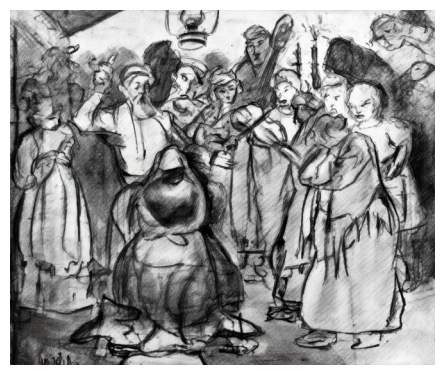
Ceremony of the veiling of the bride before the wedding
Sketch by Moshe Apelbaum |
Translator's footnotes:
by L. Szpigelman
Translated by Ricky Benhart (nee Schikman)
Edited by Toby Bird z”l
1) A Short Introduction
To write the history of the “Zagłębier Zeitung” [Zagłębie Newspaper] is surely no easy task, if one wants that this work to be accurate and conscientiously done, because a whole era comes into play here, a jubilee where you have to turn back the pages and refresh the memories of 26-27 years ago.
In such moments very variant and colorful memories arise that keep on changing while flashing by, with one memory chasing the other, and we think that we are looking through a kaleidoscope in which we admire a marvelous symphony of colors.
When you take a newspaper in hand and want to acquaint yourself with it, you must first look at the title to see how old it is, for how many years it has been published, and if it has reached a respectable age; only then can it be treated with the respect and acknowledgement that it deserves.
Naturally, as soon as a newspaper has been in existence for a long time, then we have to pay attention to it, even if it is only for the age that it has reached, in the same way that we respect an elder person which we assume has acquired wisdom as well as age over the years.
And a newspaper is indeed like a living being. From the first moment of its inception, it has to be nurtured like a child from birth on.
And there is a lot to endure from this capricious child-newspaper: all of a sudden it has uncovered a secret which has the whole town and its surroundings reeling; another time the same child sends out warnings not to play in the mud from which it could become very difficult to disengage and get clean.
This is, in fact, the mission of a newspaper, i.e. to be alert and like a sensitive seismograph, to detect the differentiated vibrations in the social life of the place.
The coin also has a flip side: the newspaper, from its side, has the obligation to do everything in its power in order to reach a certain required level if it wants to aspire to the moral right to dictate and to deliver decisive opinions which the public should consider.
In order to attain this degree of acceptance, we have to conserve the sanctity of the printed word. Each problem must be handled honestly, with integrity and sincerity. The truth – no matter how terrible or awful it might be – must be the ideal of those that nurture the newspaper, but simultaneously, lies must be uprooted without consideration of whom it might bother or anger.
Did we preserve these axioms? Was this the ideal of the founding fathers? These very important questions should only be answered by the reading body of the newspaper, these very same people who were raised and educated by “The Zagłębie Newspaper.”
2) The Pre-War Period
On July 21st, 1911, the first edition of the “Zagłębie Newspaper” was published. But in those years, to publish a newspaper was no easy matter for two reasons. First of all, the average person was afraid of approaching the printed word, notwithstanding that this same person might have had a tremendous love for Jewish culture. On the contrary, the stronger the relationship, the greater the appreciation for the printed word; thus the more one felt the responsibility it implied.
Just as a pious scribe would go to the Mikveh to purify himself prior to writing the holy letters of the Torah, thus also the writer felt the words he was to publish as holy script. He, therefore, viewed his work not as a profession, but rather as a higher ideal which he had been granted from the powers up above.
Secondly, in those years – during the reign of the Russian monarchy – it was not easy to get a concession for a newspaper, so that the publication of one was not entirely kosher. Therefore, they couldn't even consider, at that time, to give the “child” the name “The Zagłębie Newspaper.” They had to try to finagle and fool the Tsarist regime by giving the paper the alias “Advertisement Sheet,” which was edited as a free attachment to the Warsaw newspapers. Otherwise, they would never have been able to sneak it in.
Later on, we were allowed to charge for the paper, and from that moment on we were able to assume the role of an independent organism which was spread from Sosnowiec to Piotrków and was, aside from in Łódź, the only Yiddish publication in the Congress-Poland province.
The “Annoncen Blatt“ [Advertisement Paper] quickly started to develop, so much so, that it was soon necessary to open a publication department in Częstochowa. This department was under the leadership of Rafael Federman, with the association of Mosze C. (Checinski is now a publisher in America). The newspaper was also distributed farther in Piotrków, Radomsk, Kielce, Lublin and even in Upper Silesia which at that time was part of Germany.
The fact is that the local Jews were already quite assimilated and did not have any real interest in a Yiddish newspaper, but the fact that Zagłębie and Upper Silesia were bound economically forced the Upper Silesian Jews to remain in contact with us.
[Page 65]
The merchants in Katowice and Bytom [Beuthen], the industrialists, the doctors
and others like them, knew how to exploit this newspaper infrastructure and
filled it with advertisements at a time when the general public did not
understand why they spent so much money on such foolishness.
The advertisement section flourished, but the informative part of the newspaper lagged behind and developed very slowly. For example, the writer of this article started to edit publications in the form of “letters” under the alias “Abraham” – reflections of current social life. Later on, the chronicles of all the cities and towns became richer and more interesting.
Thereafter, we were joined by Lajbl Goldsztajn, who worked intensively writing theater reviews and also some light articles.
At the same time Jeszaja Lewkowicz appeared who began, more or less, to take part in the newspaper.
Later on he was joined by Maks Aronowicz, who took part in the newspaper with enormous sacrifice making the effort to give the newspaper a fitting tone and form.
Szlomo Abramson, living in Będzin, also contributed to the economic articles, which were written with a business sense, and the reader felt that he is being addressed by a knowing intelligent person from whom there was much to learn.
The following people began to contribute individually with polemic articles: J. Wygodzki, Goldmer, Jewic, J. M. Wajnryb, B. Preger, etc.
Kielce, that played a major role as a state capital, awarded us the then still very young poet Fiszel Bimko who, today, occupies a very important place in the Yiddish literary family of America.
This was a first period of the Yiddish published word in Zagłębie.
It should be stressed that all of the co-workers, aside from myself, did not know at the time that the newspaper was illegal and that we were threatened at any moment to be arrested. Notwithstanding all that, we persisted until we were finally granted a concession from the Piotrkówer governor for our newspaper, and at which time it began to be called “Unzer Telefon” [Our Telephone].
If we had already progressed, making the “Annoncen Blatt” [Advertisement Paper] into an independent paper that cost money which had, at the time, an immense importance – the fact that we received this concession meant that we had broken through a tremendous barrier, permitting us to work legally.
For this unbelievably difficult pioneering work, I, who am penning this article, must thank my father who stopped for no one and at nothing until he was able to realize this concession for the paper.
Prior to this moment, we had to print our newspaper in Szlomo Belchatowski's printing shop in Piotrków, which, I must say, was not an easy task. Having received the concession for “Unzer Telefon” [Our Telephone], we started to look around for a printing shop in the Będzin area. In order to achieve this we linked up with Efraim Zajdner, who, in those years, possessed the largest printing shop in Będzin, and on November 1913, the first edition of “Our Telephone” appeared as a totally legal newspaper. This date is most important with relevance to the affairs of the Yiddish press in Zagłębie.
Just after 2 editions of the legal newspaper had been published, we received, from Breslau [Wrocław] the sad news that the Będziner Rav, Reb Issachar Graubart z”l had passed on. We then printed an extra edition which was distributed in thousands of copies, not only in our city, but also in the surrounding area and in cities farther away. The interest in the newspaper became so big that we had to start printing daily, at least until after the eminent Rabbi's funeral and his burial.
As time went on, the newspaper invested more and more resources in itself and gathered around it the cream of Yiddish-speaking Zagłębie.
As an impartial organism, our newspaper tried to function on a very high level and thus battled for a better existence and a more beautiful future. Our articles which were logically written drew respect and interest and thus also attracted a continuous stream of contributing co-workers such as J. Pejsachson, M. Halpern, G. Stawski, B. Tencer, M. Fajnkind, etc.
But in the middle of the development of our newspaper, in its most glorious and sparkling period, lightning struck and the fires of Hell descended as World War I broke out in 1914.
3) Occupation Period
Friday, July 31st, 1914 the newspaper appeared, and the next day, on Saturday, the Russian militia, Natshalstoveh, and the governmental police administrators fled to Warsaw in a tumult.
Sunday, Zagłębie was already occupied by a German military division. The fear was unimaginable because the Germans declared war and imposed occupation conditions, first of all, requisitioning all food products.
We were immediately cut off from Warsaw and Łódź and had no communication so that we found ourselves in a box, closed in, without being able to catch our breath. Then, at the same time we found ourselves also in an indecisive position. What should we do? Publish the newspaper? Contact the Germans, who theoretically are those that have to supply us with the information? And then present the newspaper to the censor?
[Page 66]
That was surely dangerous because everyone was sure that any day the Russians
were going to return, and then all of us who had any contact with the enemy
would be sent off directly to freezing Siberia. On the other hand, to stand by
on the sidelines and not publish the newspaper at such a critical moment in
history, when more than in any normal time we have to take upon ourselves this
responsibility, didn't suit us either. After a lot of tribulations, we decided
to publish the newspaper anyhow, and because of the explosive current events,
we also decided to transform it into a daily for the time being.
Not having any other Yiddish newspaper, we simply swallowed all the expenses ourselves. One should not forget that at that time the newspaper served as a guide. The newspaper printed and informed the public of everything that had to be publicized and all the changes made by the German commanders, and thus the readers were informed when they are allowed to be in the streets, (curfew), what is not allowed in the house without special permission, etc… Our task was also to warn the inhabitants that they should listen to the orders of the civilian militia, even if they are fellow Jews or even acquaintances. The daily newspaper then became an important factor in our daily lives.
The longer the Germans stayed in Poland, the more they began to boss the people around, especially so in the Zagłębie area, where - because of its strategic position - they felt more secure and comfortable. It went so far that they confiscated one of the editions of “Our Telephone” and ordered the newspaper to stop printing. But the question was not solved therewith. One fine day, a committee presented itself with the editor-in-chief of the German Press Representation at its head which requisitioned our editing office, demanding the private telephone communications with the Russian army from which we receive our information for the news in “Our Telephone”. (They thought we had a type of Red Phone linked to the government.) When we explained that the name alone of the newspaper refers to the word 'telephone' and it doesn't mean that there is virtually a telephone in use, nor do we have any such communication, they didn't believe us, and they started searching all over the office and the printing room for such an underground telephone. Of course, even in the printing room they found no such telephone or apparatus. But the end was that they did not allow us to continue publishing the newspaper. We were written off by them…
4) In liberated Poland
Edited by Lisa Newman
Early on Monday, November 11, 1918, we in Zagłębie began to gradually sense there would soon be a breakthrough in the world order. Over the next several hours, the German military and civilians fled; they simply disappeared from Zagłębie with lightning speed, and customary German orderliness and punctuality. By the time we inhabitants began to understand the historical events occurring around us, there was not a single German left in sight.
A new civil militia was immediately established to maintain order; many Zagłębie citizens took part, and we even received weapons in order to achieve this objective.
At the same time our newspaper “Our Telephone” (which had strongly opposed the Germans) reappeared, only to be discontinued again by the Polish government on June 28th1919, till the whole issue of “Our Telephone” could be cleared up.
In order not to lose momentum during this important historic time, we republished our earlier issues: on July 4th 1919 there we published “Friday” and on July 11th “Shabbat Eve”. But in the absence of specific explanations about the closing of “Our Telephone” we didn't dare risk publishing further issues without approval, and so on July 18th 1919 we began publishing instead “The Zagłębie Newspaper”, which exists until today.
With the rebirth of an independent Polish government, Polish citizens were freed from the yoke of slavery and a new life pulsated. Together with the Polish people, we Jews, also contributed bricks and mortar to the immense rebuilding process of an independent Poland. At this historic moment our social life began to take form too: the newspaper became a living factor, the roadmap for the citizens who undertook their responsibility towards the newly established government.
We were very careful to maintain a “clean” newspaper, not to dirty or degrade the written word. We avoided dealing with personal polemics, nor did we allow individuals to carry out, in the name of the newspaper, things that would be to their benefit alone. We did, however, show the utmost recognition and gratitude to honest and devoted social representatives who acted for the good of the whole. More than anything else, we hated false flattery, and felt no obligation in that regard, as might have been the case in other provincial newspapers.
In fact, many individuals have tried to take revenge on us whenever possible, but we do not concern ourselves with that at all. From the first day the newspaper appeared until today, we never sought favors or advertisements from any company or large industrialist, nor did we pursue any demands or favors via the newspaper.
[Page 67]
Indeed, we refused to celebrate the newspaper's 25th anniversary with a jubilee
issue (as would have been appropriate to a newspaper of our standing) as
friends locally and abroad suggested, simply because publishing such an issue
would have entailed great expense and required subsidies from outside which we
did not want.
The newspaper refused to favor one side or another; we always served the interest of the people and fought for the good of all, no matter their political allegiance.
The newspaper's faithful readers are found not only in Zagłębie, but also among our Zagłębie brethren abroad, in Israel, America, or anywhere else in the world; wherever they are, they seek in “The Zagłębie Newspaper”, “the haymish, warm regards from the old home that they once knew”.
Our in-house permanent editorial staff includes R. Let, S. Lewkowicz (Ben Amotz), Selekt, Eles, and Dr. Papori, and the following regular contributors: J. Oberzanek, P. Blumenkranc, Ch. Zieloni, S. Rotenberg, Dr. Weinziher, Dr. Rechtman, Juda Jafet, J. Wygodzki, Z. Haber, L. Goldsztajn, Rosa Jakubowicz, L. Tenenbaum, and N. Szternberg.
Important work, worthy of mention, was carried out by the following co-workers: M. Fajnkind, in 1934, wrote, among others, in-depth dissertations on subjects, such as “The Będziner Community in the Second Half of the 19th Century” and later “The First Epoch of the Sosnowiecer Community”. Aside from that, for every holiday there was an historical account in accordance with the holiday on hand.
|
|
|||
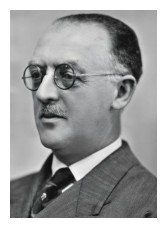
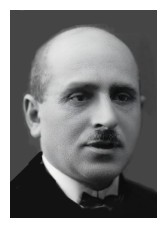
| Eliezer Rubinlicht
(The chairman of the community committee) |
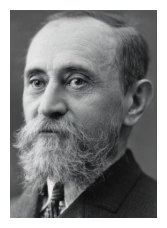
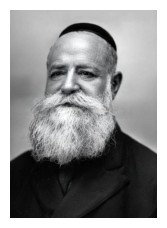
Abram Liwer
(Vice chairman of the community committee) |
|||
|
|
|||
|
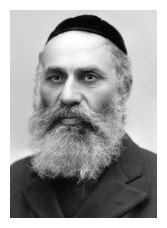
Szlomo Jicchak Rinski
(The chairman of the community board) |
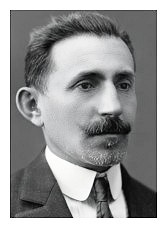
Nuta Londner (Vice chairman of the community board) |
[Page 68]
J. Wygodzki had to prepare an article for each holiday based on the books of
our sages z”l. He returned to their past when Jews were still an
independent nation in their own country with their own language, culture and
tradition, and beautifully entwined the past into the future. Such studious
research that is simultaneously apropos to current life could only issue from
the pen of one who possesses so much knowledge and intelligence as our friend
Wygodzki.
S. Lewkowicz (Ben Amotz) is co-editor and directs the Zagłębie chronicles. He also puts together the satirical and humorous “Koch-Leffel” [wooden spoon] and writes vividly under the generic name of “Heard and Seen”. He also worked on the editorial correspondence of “Our Panorama”.
S. Rotenberg at first wrote articles about current events, later covering problems of the times under the heading “Remarks”. As well, he gave details about professional events in art and reviewed art exhibits and musical and theatrical performances. When Rotenberg returned from Vilna where he studied in 1932-1933, he publicized concerning the differences in our newspapers and this in a series of articles entitled “The Lithuanian Jerusalem”, wherein he came to express the general life in Jewish Vilna, and in specific the activity of the important Jewish culture in Vilna and its social institutions. For his work, Rotenberg was rewarded with a collective letter of gratitude/appreciation from the presidents of all these institutions. This letter was forwarded to us and published in “The Zagłębie Newspaper” September 1, 1933.
P. Blumenkranc reflected on the most sensitive and disturbing issues of the times, as well as writing serious articles about various subjects both Jewish and secular. Blumenkranc also painted beautifully and wrote fine theatrical reviews and critiques.
G. Stawski wrote for us reports and character sketches about modern leaders of national thought such as N. Sokolow and Ch. N. Bialik, whom he still remembered from the time that he was a teacher in Sosnowiec. Stawski also wrote about the differences within the newspapers. In 1936 he wrote a larger interesting dissertation entitled “Memoirs of the First Zionists in Zagłębie”.
In the largest capitals abroad we were represented by the following correspondents: Z. Haber (Vienna), Dr. Imerglik (New York), S. Wajs and Motek Hampel (Israel). Dr. Froman covered the rest of America, Africa and other countries.
As you know, we have several editorial friends, who write under aliases without revealing themselves, nor do they allow the editors to reveal their identities. Readers and friends of the newspapers have a hard time accepting that they should read weekly articles written by “X” or “Y” without knowing who the person is behind them.
This happened years ago. In Sosnowiec, all the readers were certain, just as two plus two equals four, that Dr. Papori is no other than Dr. Perlman. And as many times as we might have declared to our readers that it is not so, they believed neither our nor Dr. Perlman's denials, and he therefore often bore the brunt of their dissatisfaction. But he had an opportunity to prove to his followers and opponents that Dr. Papori of the newspaper was not himself, when one of our colleagues published an article that presented the problems of the community in a manner that did not correspond to Dr. Perlman's opinion, which was known as he was a community representative. Yet still there were those who remained in doubt, and only when Dr. Perlman passed away and Dr. Papori continued to write, were they convinced that his declaration and ours were the truth.
Another episode with one of our pseudonyms happened in Będzin, several years ago. A delegation of three well-known and respected people in the city came into the editorial office and requested to know the identity of our colleague who penned under the name of R. Let. He had apparently offended the pride of their association for which they suffered a material loss and since they didn't want to have a run-in with the editorial staff, they only wanted to sue the author himself. Of course we responded that we were not allowed such a thing without the author's approval. But they declared that they knew anyhow who the culprit was, that everyone knows that the author is in reality Rubinlicht. They were convinced that that R. Let stood for Ru-Benlicht.
Such incidents arose because we allowed writers to keep secretive pseudonyms.
Since 1933, we have also published for Kielce and surroundings an altered edition of our newspaper, called the “Kielcer Zagłębie Newspaper”.
The reader who eagerly takes up the newspaper surely doesn't realize how difficult it is to edit a newspaper that is responsible towards the public, and keeps to an adopted line of thought; reading the finished product, he doesn't see the difficulties and sacrifices involved in producing it.
Thus we made an attempt at a short characterization, an overview of the publication of “The Zagłębie Newspaper” in all its stages.
|
JewishGen, Inc. makes no representations regarding the accuracy of
the translation. The reader may wish to refer to the original material
for verification.
JewishGen is not responsible for inaccuracies or omissions in the original work and cannot rewrite or edit the text to correct inaccuracies and/or omissions.
Our mission is to produce a translation of the original work and we cannot verify the accuracy of statements or alter facts cited.
 Będzin, Poland
 Yizkor Book Project
 JewishGen Home Page
Copyright © 1999-2026 by JewishGen, Inc.
Updated 19 Oct 2026 by OR